The 29 August 2018 Landslide on the Natural Hillside above Fan Kam Road, Pat Heung
Basic Data
Material:
Colluvium
Feature Affected:
Natural Hillside
Source Volume:
550 m3 (Landslide Cluster 2228)
800 m3 (Landslide Cluster 2229U)
200 m3 (Landslide Cluster 2229L)
Report Reference: LSR 2/2019
Description
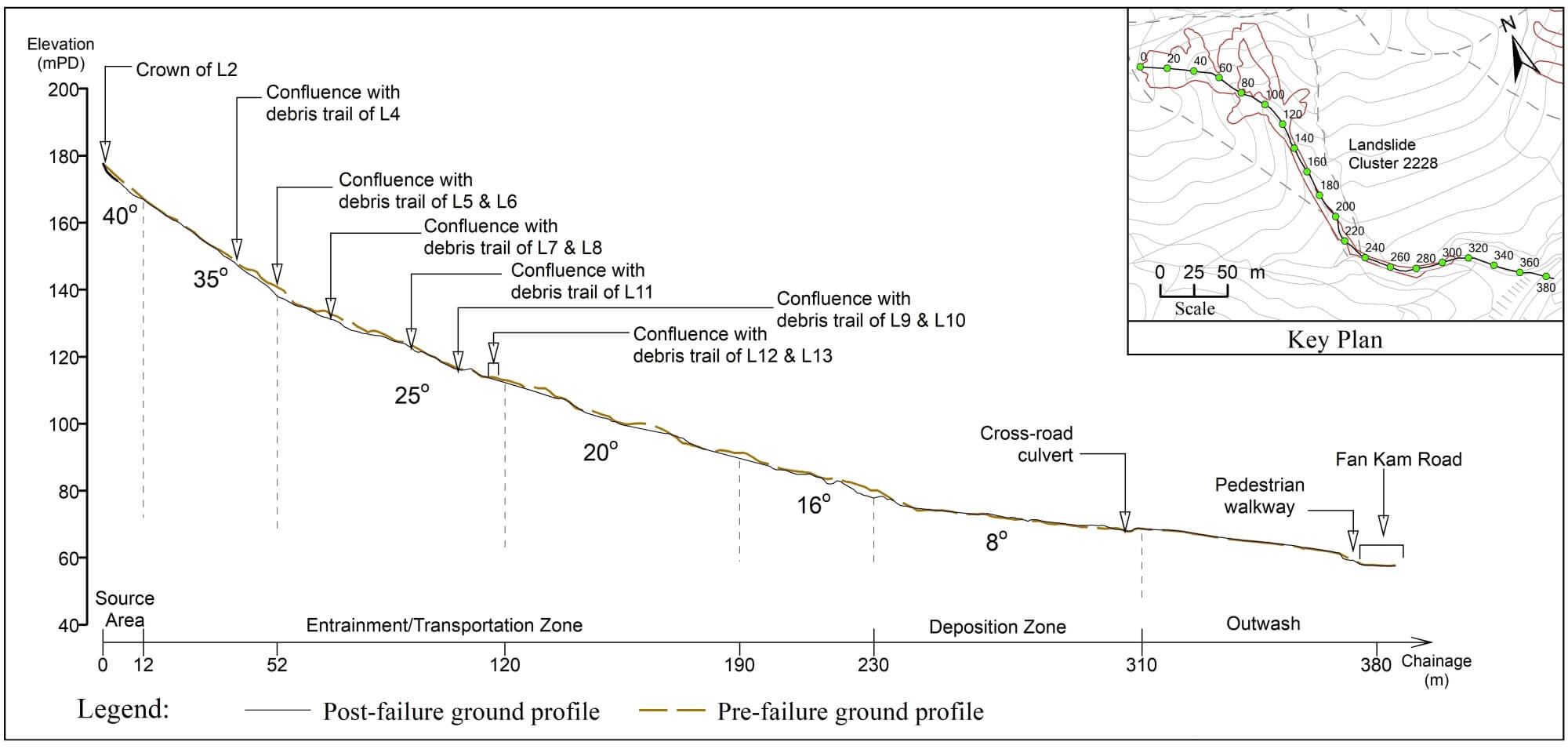
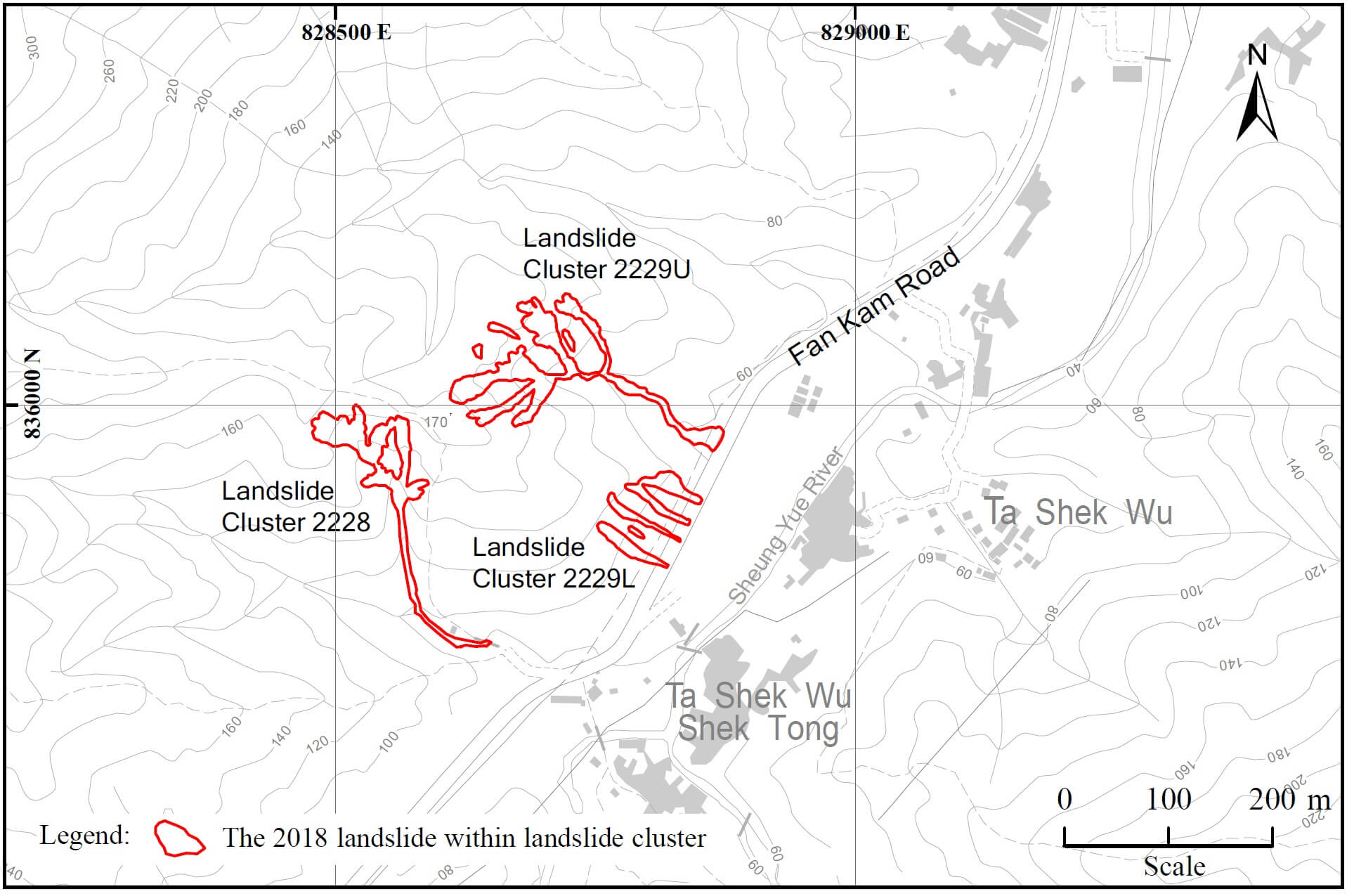
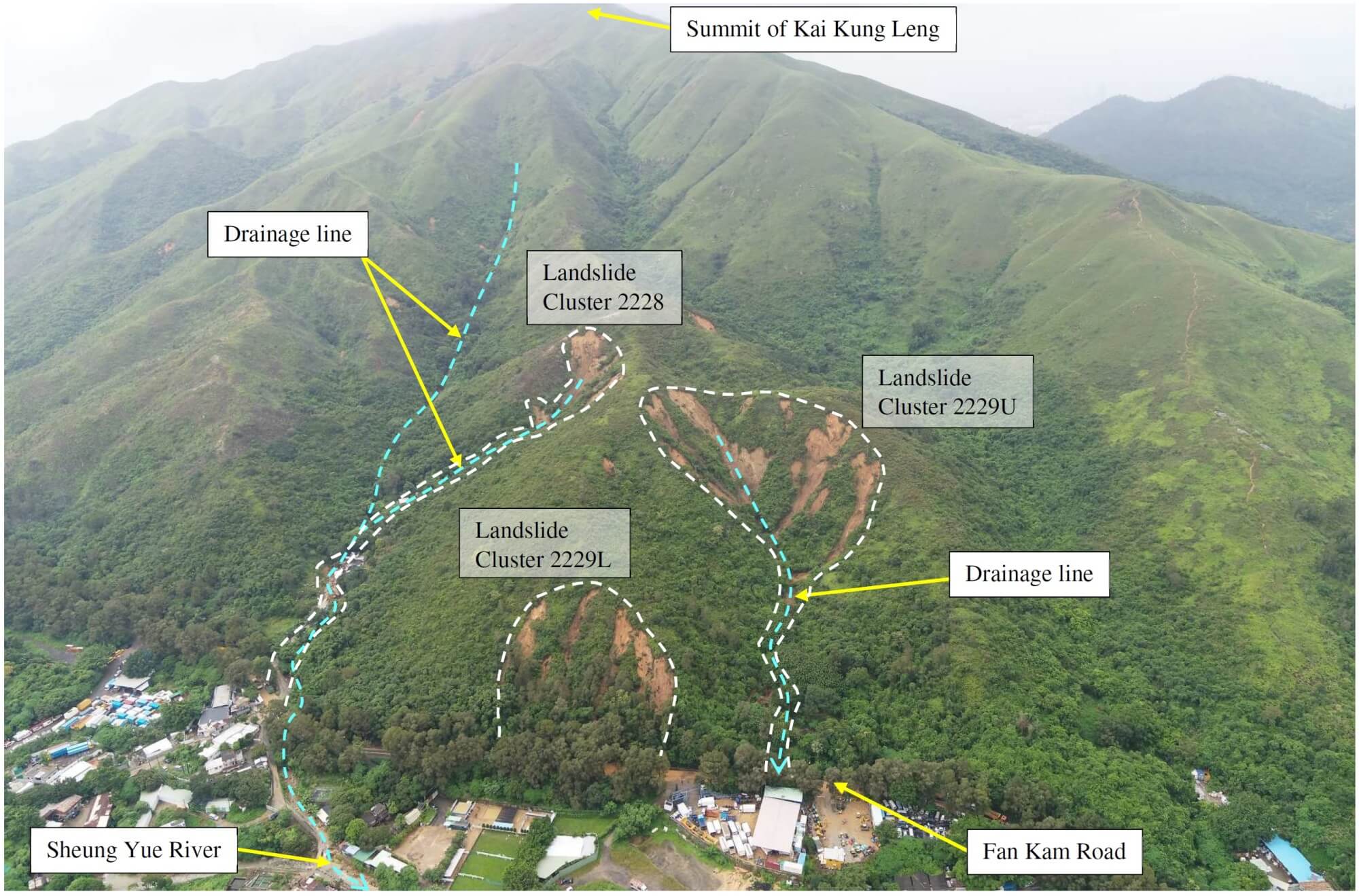
On 29 August 2018 while Landslip Warning was in effect, landslides in three distinct clusters, denoted as 2228, 2229U and 2229L, occurred on the natural hillside above Fan Kam Road with total source volume ranging from 200 m3 to 800 m3 (Incident Nos. 2018/08/2228 and 2018/08/2229). The landslides typically initiated as open hillside failures from multiple source areas within the landslide clusters. Debris from most of the source areas at landslide clusters 2228 and 2229U converged into drainage lines and turned into fairly mobile channelised debris flows descending towards Fan Kam Road, with a runout distance of about 300 m excluding outwash debris. The landslide debris mostly came to rest before reaching Fan Kam Road but outwash debris inundated both lanes of the road resulting in temporary road closure among other consequences.
The landslides were triggered by an intense rainstorm which was the most severe on record. The landslides, were generally originated from the locally over-steepened terrain (typically 35 to 45 degrees) at the upper part of the respective hillside catchments where the hillside retreat process remains active, as evidenced by the nearly continuous steep terrain with a high concentration of past landslides and heads of drainage lines. Associated with the on-going geomorphological process, the steep terrain in this locality has predisposed it to the risk of landsliding. It is noted that the source areas of most of the 2018 landslides overlapped with or were close to the locations of past landslides where reactivation or retrogression of previous failures could have contributed to the present failures.
The landslides typically involved shallow detachment (generally less than 1 m in depth) of the thin mantle of colluvium overlying the in-situ weathered materials. The failures are likely to have been caused by infiltration rendering the development of perched water table within the colluvium above the strata boundary with a permeability contrast. The persistent quartz veins in the weathered materials could also have impeded the groundwater flow exacerbating the build-up of the perched water and hence contributed to the failures.
Observations
These incidents highlight the strong clustering of landslides on the hillside for which the complex combination of interconnected geomorphological and geological factors had rendered it susceptible to multiple failures under heavy rainfall.